Protein After 40: How Much Do You Need to Preserve Muscle?
A practical, evidence-informed method for calculating protein needs, planning meals, and supporting muscle with strength training.
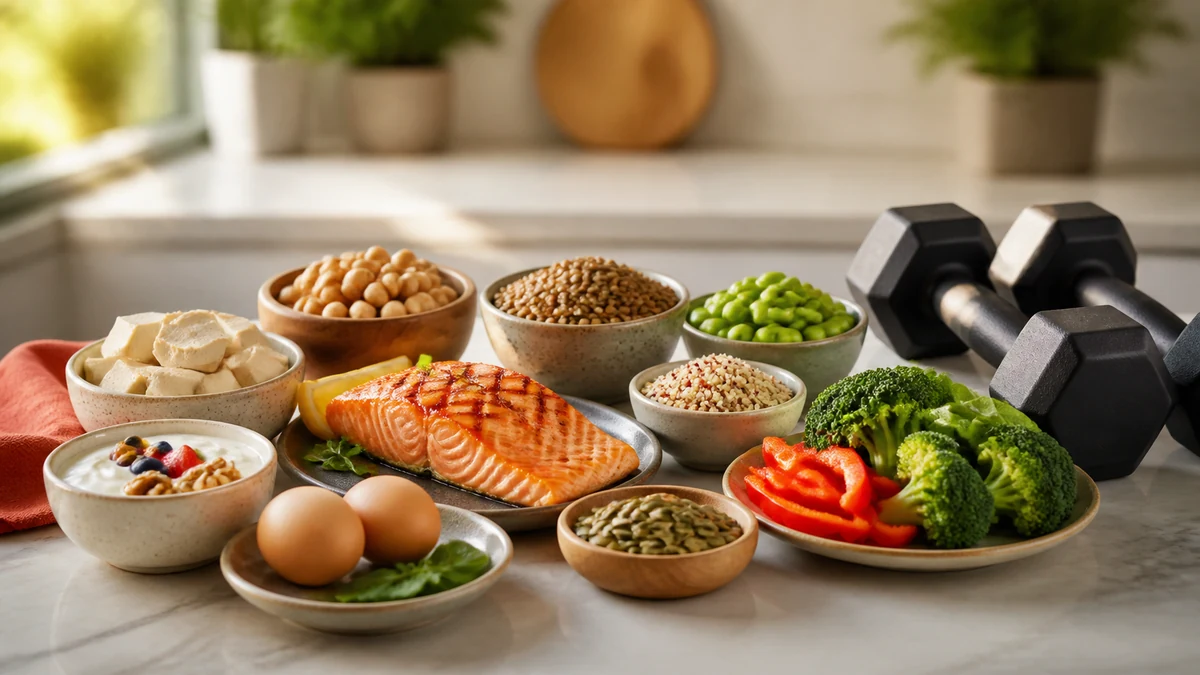
The first sign that your protein routine needs work is rarely dramatic. Recovery feels slower. Breakfast keeps you full for only an hour. Strength that once came easily requires more effort. None of this means your body “stops building muscle” at 40—but it does mean that preserving muscle becomes a smarter long-term goal.
Protein helps repair tissue and provides the amino acids used to build and maintain muscle. Yet eating more is not automatically better. Your useful target depends on body size, activity, total food intake, health conditions, and whether you are trying to gain muscle, lose weight, or simply stay capable as you age.
This guide to protein after 40 gives you a starting calculation, a meal-by-meal method, and a realistic food plan you can use today.
Why protein matters more as you get older
Adults gradually lose muscle with age, especially when activity falls, illness interrupts normal routines, or calorie intake becomes too low. Muscle supports more than appearance: it contributes to strength, balance, glucose management, and the ability to handle daily tasks.
Older muscle may respond less strongly to a small protein serving than younger muscle—a concept often called anabolic resistance. That does not mean muscle cannot grow. It means the basics deserve more consistency: challenging the muscles, eating enough high-quality protein, and repeating both over time.
Federal dietary guidance emphasizes getting enough protein as people age and choosing a variety of nutrient-dense sources. Research reviews generally find the clearest benefit when protein supplementation is combined with resistance training, not when a shake replaces the training stimulus.
How much protein do you need after 40?
There is no single number that fits everyone. Start with body weight and context.
The adult Recommended Dietary Allowance is 0.8 grams per kilogram of body weight per day. It is a population-level amount designed to meet the needs of nearly all healthy adults, not necessarily an optimal muscle-building target for every active person.
For practical planning, many healthy adults who train or want to preserve muscle use a range around 1.0 to 1.6 grams per kilogram per day, depending on age, training, calorie intake, and professional guidance. The lower end may suit a generally active person focused on protein intake for healthy aging. The upper end is more relevant to consistent resistance training or calorie restriction. More is not automatically more effective.
A simple protein calculator
- Convert pounds to kilograms: weight in pounds ÷ 2.2.
- Multiply kilograms by a starting target.
- Test the plan against your appetite, training, health, and total diet.
| Body weight | 0.8 g/kg baseline | 1.2 g/kg active target | 1.6 g/kg higher training target |
|---|---|---|---|
| 130 lb / 59 kg | 47 g | 71 g | 94 g |
| 150 lb / 68 kg | 54 g | 82 g | 109 g |
| 180 lb / 82 kg | 65 g | 98 g | 131 g |
| 200 lb / 91 kg | 73 g | 109 g | 146 g |
Treat these as starting points, not prescriptions. A larger person with substantial body fat may need a clinician or dietitian to choose a more appropriate reference weight. Endurance training, resistance training, pregnancy, injury recovery, and medical conditions can also change needs.
Is protein timing important?
Your total daily intake matters most, but distribution can make the plan easier and may provide repeated opportunities for muscle protein synthesis.
Instead of eating very little protein all day and most of it at dinner, spread it across three or four eating occasions. For many adults, roughly 25 to 35 grams at a main meal is a practical planning range. Body size and the protein source still matter; this is not a magic threshold.
A simple pattern looks like this:
- Breakfast: Greek yogurt, oats, berries, and seeds;
- Lunch: lentil-and-chicken bowl or a tofu grain bowl;
- Snack: cottage cheese, milk, fortified soy beverage, or edamame;
- Dinner: fish, lean meat, eggs, tempeh, beans, or another substantial protein source with vegetables and whole grains.
Training days do not require a perfect 30-minute “anabolic window.” A protein-containing meal within a few hours before or after training is a sensible approach. Consistency across the week matters more than racing toward a shake the moment the last set ends.
The best protein foods after 40
The best source is one you tolerate, enjoy, can afford, and can repeat. Build variety so protein also brings other nutrients. For more help building a balanced pattern around these foods, see FitnessGuide's nutrition guidance.
Animal-based options
- Fish and seafood
- Eggs
- Greek yogurt, cottage cheese, milk, and kefir
- Chicken, turkey, and lean cuts of meat
These foods can provide highly digestible protein, vitamin B12, iron, calcium, vitamin D, or omega-3 fats, depending on the choice.
Plant-based options
- Lentils, beans, peas, and chickpeas
- Tofu, tempeh, edamame, and fortified soy milk
- Seitan, when gluten is suitable
- Nuts, seeds, and whole grains as supporting sources
Plant proteins work. You do not need to combine specific foods at every meal, but variety across the day helps cover essential amino acids. Because some plant foods provide less protein per serving or are less digestible, portions and total intake may need more attention.
Do you need protein powder?
No. Powder is a convenience, not a requirement. Whey, casein, soy, pea, or blended plant protein can help when appetite, time, travel, or a higher target makes food alone inconvenient.
Choose a product with a short ingredient list and independent quality testing where possible. Count it as part of the diet, not as insurance against a low-quality eating pattern. A shake that displaces fruit, vegetables, fiber, and regular meals can solve one number while creating other gaps.
A realistic one-day protein plan
Here is an example for someone aiming near 100 grams per day. Portions and exact values vary by brand and preparation.
- Breakfast — about 27 g: Greek yogurt with oats, berries, and pumpkin seeds.
- Lunch — about 30 g: Chicken and lentil salad with vegetables and olive-oil dressing.
- Snack — about 15 g: Cottage cheese with fruit, or edamame for a plant-based option.
- Dinner — about 30 g: Salmon or tofu, roasted vegetables, and quinoa.
Total: approximately 102 grams.
The lesson is not that everyone needs 102 grams. It is that a moderate target becomes manageable when protein appears at each meal. If breakfast currently contains only coffee and toast, improving that meal may be easier than doubling dinner.
Protein alone will not preserve muscle
Protein supplies building material; resistance training supplies the reason to use it.
Aim to train all major muscle groups at least twice per week, matching the exercises to your experience and health. The sets should become challenging while technique remains controlled. Over time, gradually increase resistance, repetitions, range of motion, or exercise difficulty. FitnessGuide's training programs can help you structure that progression.
Walking, cycling, and other aerobic activity support health but do not fully replace progressive strength work. Sleep and sufficient calories matter too. An aggressive diet can make training quality and recovery worse, even when protein intake looks impressive on paper.
Common protein mistakes
Mistake 1: Saving almost everything for dinner
Better approach: Put a meaningful protein source at breakfast and lunch, then let dinner complete the target.
Mistake 2: Chasing the highest possible number
Better approach: Choose the lowest effective, sustainable target for your goal. Extra protein still contributes calories and can crowd out other foods.
Mistake 3: Depending on bars and shakes
Better approach: Use supplements to fill a genuine convenience gap while whole foods provide most meals, fiber, and micronutrients.
Mistake 4: Ignoring strength training
Better approach: Pair nutrition with two or more well-designed resistance sessions each week.
Mistake 5: Copying someone else's target
Better approach: Calculate from your own body weight and adjust for health, activity, appetite, and professional advice.
Your seven-day action plan
Do not rebuild your entire diet overnight. Use this short audit:
- Estimate your current protein intake for three normal days.
- Calculate the 0.8 g/kg baseline and a goal-appropriate target.
- Identify your weakest meal.
- Add one repeatable protein food to that meal.
- Schedule two full-body strength sessions.
- Notice hunger, recovery, digestion, and training performance.
- Adjust portions; do not add supplements automatically.
Frequently asked questions
Can you build muscle after 40?
Yes. Adults can improve strength and muscle with progressive resistance training, adequate protein, enough energy, and recovery. The rate of progress varies, but age does not eliminate the ability to adapt.
Is 100 grams of protein a day too much?
It depends on body size, health, and goals. For an 82 kg (180 lb) adult, 100 grams is about 1.2 g/kg. For a much smaller person, it represents a higher relative intake. People with relevant medical conditions should obtain individualized advice.
Is plant protein enough after 40?
Yes, when total intake, food variety, and meal planning are adequate. Soy foods, legumes, seitan, and protein-rich grains can form the foundation; a plant protein powder is optional.
Should I eat protein before or after a workout?
Either can work. A protein-containing meal within a few hours on either side of training is practical. Daily consistency and training quality are more important than a narrow timing window.
The bottom line
The best protein strategy after 40 is not extreme. Calculate a reasonable starting target, distribute it across meals, choose foods that add nutritional value, and give that protein a job through progressive resistance training. The plan that preserves muscle is the one you can repeat for years—not the one that wins a one-day nutrition challenge.
Sources and further reading
- U.S. Department of Health and Human Services and U.S. Department of Agriculture. Dietary Guidelines for Americans, 2025–2030.
- U.S. Department of Health and Human Services. Dietary Reference Intakes.
- National Institutes of Health, Office of Dietary Supplements. Dietary Supplements for Exercise and Athletic Performance.
- Wirth J, et al. Impact of Increased Protein Intake in Older Adults: A 12-Week Double-Blind Randomised Controlled Trial. 2024.
- Hou L, et al. Effect of Protein Supplementation Combined With Resistance Training on Muscle Mass, Strength and Function in the Elderly: A Systematic Review and Meta-Analysis. 2019.
Editorial note: This article provides general educational information and is not individualized medical advice. Have the final page reviewed by a registered dietitian or qualified clinician before publication, and identify that reviewer accurately on the page.