Moon Pose in Bodybuilding: Why the Famous Pose Is Banned
The bodybuilding moon pose is a rear-facing forward fold made famous by Tom Platz—and prohibited on many modern competition stages.
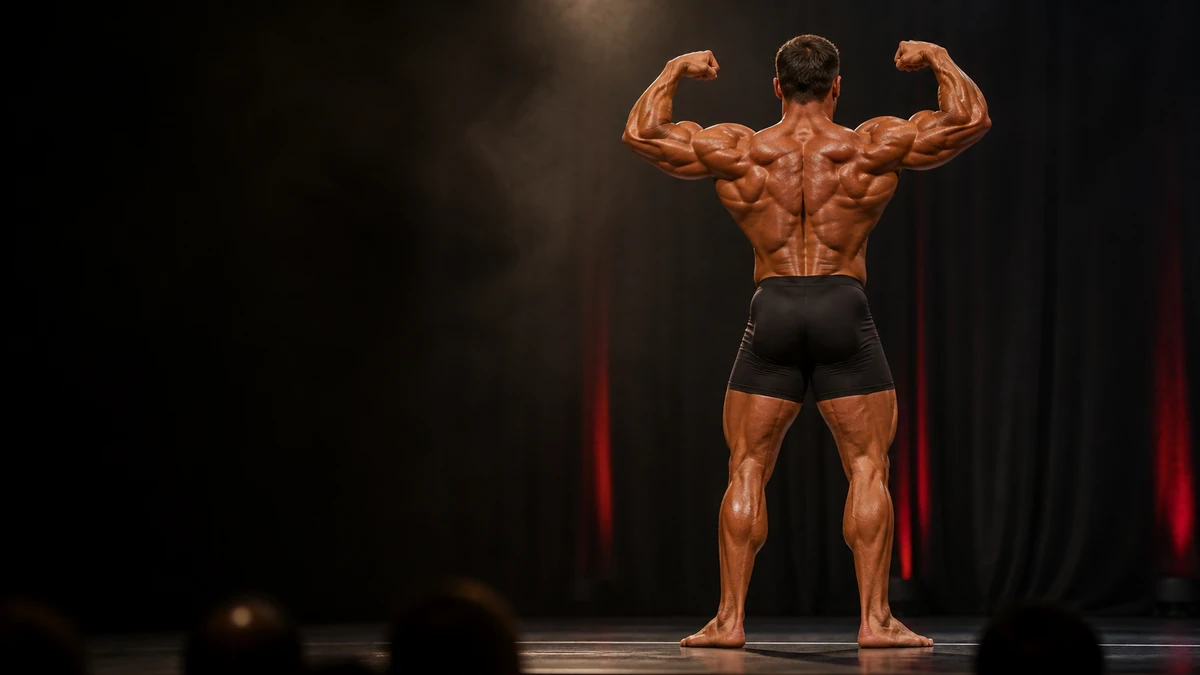
The moon pose is back in bodybuilding conversations—even though competitors can be disqualified for performing it on many modern stages.
This is not the yoga half-moon pose. In bodybuilding, the moon pose is a rear-facing forward fold used to display the hamstrings, glutes, calves, and lower-body conditioning. It became closely associated with Golden Era leg legend Tom Platz, whose extraordinary hamstring development made the pose unforgettable.
Its dramatic look also created the problem: the athlete bends forward while facing away from the audience. Major organizations came to regard the presentation as inappropriate for competition, and official rules now prohibit it.
What is the moon pose in bodybuilding?
The moon pose starts with the athlete's back toward the judges or audience. The athlete hinges forward at the hips, keeps the legs prominent, and contracts the muscles along the back of the lower body.
Unlike a mandatory competition pose, it was a theatrical way to reveal details that can be difficult to show from an upright position:
- hamstring separation and thickness;
- glute development and conditioning;
- calf size and definition;
- the transition between the glutes and hamstrings; and
- flexibility and control while maintaining muscular tension.
The name is a cheeky reference to the athlete's rear-facing position. It should not be confused with Half Moon Pose (Ardha Chandrasana) or Crescent Moon Pose (Anjaneyasana) in yoga. Those are balance or lunge-based postures with completely different purposes.
Why is the moon pose trending again?
During the checked U.S. 24-hour window, Google Trends showed a sharp rise in related searches: “moon pose bodybuilding” rose 600%, “the moon pose” rose 120%, and “the moon pose bodybuilding” rose 70%.
Trends data identifies what people are searching for; it does not establish the cause of a spike. The most likely explanation is renewed circulation of classic bodybuilding footage, short-form videos, and discussions about banned poses. Rather than guessing which single clip started it, the useful question is why a pose that disappeared from competition still fascinates fans.
The answer is a mix of impressive muscularity, Golden Era nostalgia, controversy, and a rule that makes people want to know what they are not allowed to see onstage.
How Tom Platz made the moon pose famous
The exact origin of the pose is not well documented, so claims that one person definitively invented it should be treated cautiously. Tom Platz is nevertheless the athlete most strongly linked to it.
Platz competed during bodybuilding's late-1970s and 1980s era and became famous for exceptional leg development. His quadriceps usually receive the most attention, but his hamstrings and calves were equally important to the complete look. The moon pose placed those strengths directly in front of the audience.
That combination made the pose memorable: it was not simply provocative. On Platz, it functioned as a highly specific display of a physique advantage. Images and clips continue to circulate because they show a level of posterior-chain development that remains rare.
Other bodybuilders have performed or referenced the pose, but describing it as the Tom Platz moon pose remains common because his version became part of bodybuilding culture.
Why was the moon pose banned?
The simplest supported answer is presentation. The bent-over, rear-facing position was considered too revealing or suggestive for a professional bodybuilding stage.
The National Physique Committee's official bodybuilding rules are direct: Any competitor doing the ‘Moon Pose’ will be disqualified.
The cited 2025 Global Bodybuilding Organization competitor guidelines similarly prohibit the moon pose at sanctioned events.
The rule is therefore more than an unwritten tradition. A competitor should never assume that a free-posing routine makes it acceptable. Federation rules vary, so athletes must review the current rulebook for their exact organization, division, and event.
Was it banned because it is dangerous?
There is no strong evidence that safety was the primary reason for the competition ban. A deep forward hinge can be uncomfortable or risky when forced without adequate hamstring mobility, but the published rules focus on prohibition and stage conduct—not an injury finding.
Did Arnold Schwarzenegger ban the moon pose?
This is a popular online story, sometimes framed as a rivalry or judging controversy. Reliable documentation supporting the claim is difficult to find. Treat it as bodybuilding folklore, not established history.
Is the moon pose the same as a rear glute spread?
No. The names are sometimes mixed together online, but the moon pose is defined by its pronounced forward fold. A rear pose or informal glute display can use a different torso position and presentation.
What muscles does the moon pose display?
The pose is primarily a showcase rather than an exercise. It reveals muscles developed through training; performing the pose does not replace the work that built them.
| Area | What the pose can reveal | Common training movements |
|---|---|---|
| Hamstrings | Thickness, separation, and side-to-side balance | Romanian deadlifts, leg curls, hip hinges |
| Glutes | Development and conditioning | Squats, split squats, hip thrusts |
| Calves | Size and definition from the rear | Standing and seated calf raises |
| Lower back | Muscular detail and control | Well-programmed hinges and back extensions |
Exercise selection is only part of the picture. Progressive overload, suitable weekly volume, recovery, nutrition, genetics, and years of consistent practice determine how a physique develops. FitnessGuide's training programs can help structure progressive training.
What poses replaced the moon pose onstage?
Competitors do not need the moon pose to display a strong posterior chain. Rule-compliant alternatives include:
Rear double biceps
This pose displays the upper back, arms, glutes, hamstrings, and calves together. Good competitors distribute their weight carefully and keep the lower body contracted instead of focusing only on the arms.
Rear lat spread
The rear lat spread emphasizes back width and overall silhouette while still allowing the athlete to present conditioned glutes, hamstrings, and calves.
Side chest and side triceps
Both side poses can reveal hamstring sweep and leg thickness when the athlete sets the feet correctly and maintains tension from the floor upward.
Legal individual posing
Many federations allow creative transitions during a routine, but creativity does not override prohibited-pose rules. A posing coach familiar with the athlete's federation can help create memorable moments without risking disqualification.
Should you practice the moon pose?
If you are preparing for a competition, practice the mandatory and permitted poses that will actually be judged. Spending time on a prohibited pose offers little competitive value and can build a habit that becomes costly under stage pressure.
For recreational posing or bodybuilding history, the position can demonstrate how hamstring flexibility and muscular control affect presentation. However, do not force a deep forward fold to imitate a photograph. Move within a comfortable range, keep control, and stop for sharp pain, numbness, or pain radiating down the leg.
Why the pose still matters
Bodybuilding is judged through poses, not through gym lifts alone. A pose can make a strong body look exceptional—or hide years of work. The moon pose survives in bodybuilding history because it combined three things audiences remember: a legendary athlete, a visually unmistakable presentation, and controversy.
Its ban also shows how the sport has changed. Modern federations do not judge muscularity in a vacuum; they regulate attire, conduct, presentation, and which positions fit the image of the event.
You do not have to want the pose back to understand its appeal. For fans, it is a piece of Golden Era theater. For competitors, it is a reminder to know the rules before stepping under the lights.
Frequently asked questions
What is the moon pose in bodybuilding?
It is a rear-facing pose in which a bodybuilder folds forward at the hips to display the hamstrings, glutes, calves, and lower-body conditioning.
Why is the moon pose banned?
The position is considered too revealing or inappropriate for many modern competition stages. NPC rules state that a competitor performing it will be disqualified, and other organizations also prohibit it.
Who made the moon pose famous?
Tom Platz is the bodybuilder most closely associated with the pose because it showcased his exceptional hamstring and leg development. The pose's exact inventor is not clearly documented.
Is the moon pose a yoga pose?
The same words can refer to yoga positions, but the trending bodybuilding moon pose is different from Half Moon Pose and Crescent Moon Pose in yoga.
Can bodybuilders perform the moon pose in competition?
Not when their federation's rules prohibit it. Athletes should check the current official rulebook for their organization and event rather than relying on social-media clips.
The bottom line
The moon pose is a banned but unforgettable piece of bodybuilding history. It became famous as a spectacular display of Tom Platz's hamstrings and posterior-chain development, then disappeared from major stages because its presentation was considered inappropriate. Its latest search spike proves the pose can still do what great posing always does: make people stop, look, and ask questions.
Sources and further reading
- National Physique Committee. Official Bodybuilding Rules.
- Global Bodybuilding Organization. 2025 GBO Competitor Guidelines.
- BarBend. The Infamous Moon Pose Is Forbidden on Bodybuilding Stages.
- BarBend. The Evolving History of Bodybuilding Poses.
- Google Trends. Moon pose search interest in the United States.
Editorial note: Search interest and competition rules can change. Recheck Google Trends and the relevant federation's current official rulebook when updating this article. Do not present undocumented stories about the pose's origin or ban as established fact.